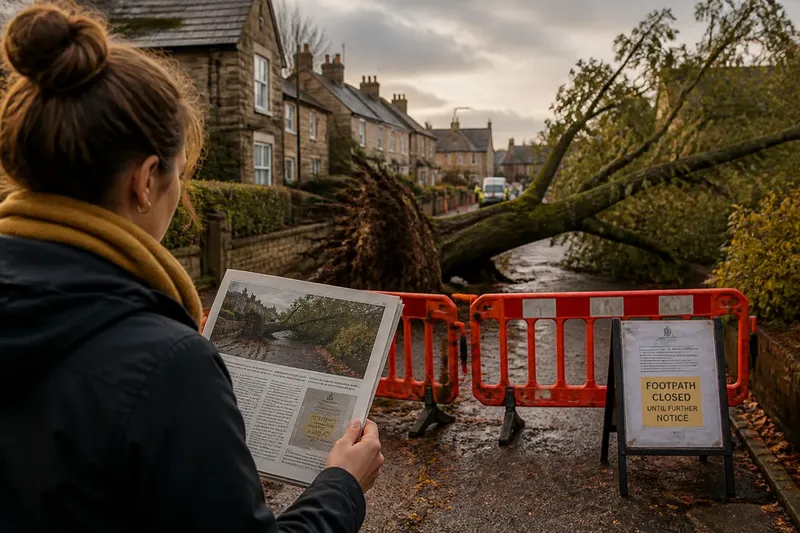
Following an Early Report Without Rushing to Certainty
Following an early report without rushing to certainty helps you track revisions, compare accounts and share a current version without hiding what remains unknown.
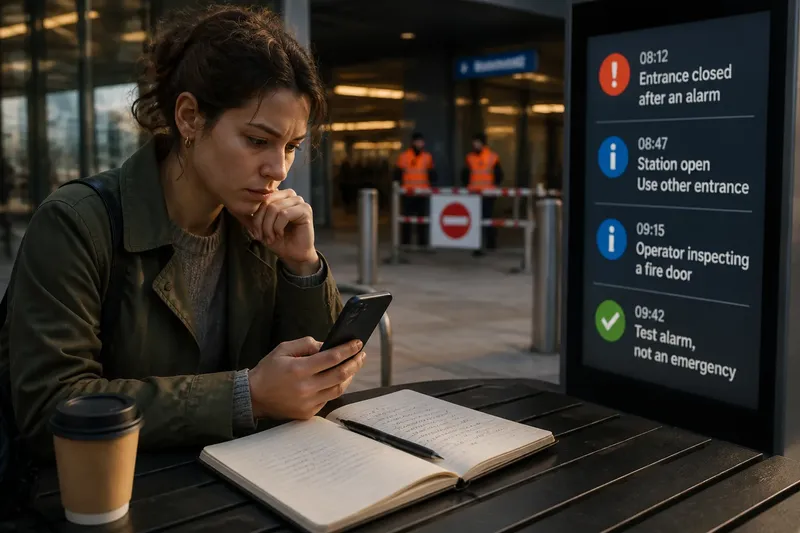
Your train app says a station entrance is closed, but the notice does not explain why. Following an early report without rushing to certainty means keeping track of how an account changes, rather than filling its gaps or treating every update as a correction.
A developing story is a moving record: a newsroom may add a source, revise a detail or explain that an earlier claim was wrong. Those changes are not interchangeable. A simple update log can help you see what changed, when it changed and what still needs checking.
Track the story as a sequence of updates
Open the report itself and look for its publication time, update notes and any correction notice. If the page has no visible history, save the link and jot down the wording you relied on, along with when you read it. A timestamp is useful because “the report says” can mean something different after a later edit.
For an invented situation, imagine a local news site first reports that the station entrance is closed after an alarm. Its later update says the transport operator closed it while staff inspect a faulty fire door. Keep those as two moments in the reporting, rather than blending them into one timeless account.
A practical update log can be as short as: “Morning notice: entrance closed; reason not given. Later update: operator says staff are inspecting a fire door.” The log records the sequence without pretending the first notice contained information that arrived later.
Decide what kind of change an update makes
Read the editor’s wording carefully. A correction signals that an earlier detail was wrong; a clarification makes the earlier wording more precise; an added detail supplies information that was not available or included before. If the report does not say which kind of change occurred, avoid assigning one yourself.
Suppose the first version says the alarm sounded at the station, and a later note says it was a test alarm, not an emergency. That later note changes the meaning of the initial description. By contrast, adding the operator’s advice to use another entrance may be useful new information without changing the original account.
When a change affects a decision you have already made, check the newest version before acting on the old one.
Compare accounts without forcing them to agree
Two reports may differ because they were published at different times, rely on different sources or describe separate parts of an event. Write down which outlet or person made each claim, and look for an explicit explanation of the difference. Do not combine conflicting details into a cleaner story simply because it sounds more complete.
Imagine one local report says the station entrance is shut, while the operator’s service notice says the whole station remains open. These statements may both be accurate if only one entrance is affected. Check the wording and scope before repeating either as “the station is closed”.
If the sources still conflict, say so in your own account. “The operator says the station is open, while the local report says one entrance is closed” preserves the distinction; “the station is closed” does not.
Use this update log when details keep moving
For a story that matters to your plans, record a few concrete observations and let each one guide what you do next. These checks keep the log useful without turning it into a verdict on information the reports do not provide.
- Check the report’s timestamp. If it is older than a later notice, read the newer notice before relying on it; if no newer notice is available, treat the account as current only to that timestamp.
- Check for a correction note. If the outlet says a detail was wrong, stop repeating the earlier version and use the corrected wording; if there is no correction note, do not assume a changed detail was an error.
- Check what the update says changed. If it identifies a new source or added fact, record that addition with its source; if the change is unexplained, describe the two versions separately and leave the reason open.
- Check whether a source is named. If a claim is attributed to the transport operator, keep that attribution when sharing it; if no source is named, do not present the claim as independently confirmed.
- Check whether accounts refer to the same place or issue. If one concerns an entrance and another the whole station, preserve that difference; if the scope remains unclear, avoid making a broader claim.
- Check whether the new detail affects your next action. If an official notice changes which entrance is open, use the current notice to plan your route; if it adds background but changes no practical detail, update your understanding without overstating its importance.
How should you handle an unresolved update?
Should you keep a copy of an early version?
Keep a link or brief note when the story affects a decision or when you need to understand how the account developed. Do not treat an old version as the current one; check the live report before relying on it again.
What if an update has no explanation?
Record the earlier and later wording, plus the time you saw each. If the difference matters, look for a correction note or another account that explains it; until then, leave the reason unsettled.
How do you handle a claim that disappears?
Check whether the outlet explains the removal or revision. If it does not, avoid presenting the deleted claim as established, and do not guess why it vanished.
When should you share a developing story?
Share only the detail that remains supported in the current account, with its source and time where they matter. If an unresolved detail is the main reason for sharing, wait for a clearer update.
Work through a changing station notice
Say you need to meet a friend at a station. The starting information is a local alert saying “entrance closed after an alarm”, with no cause given. You save the alert and note its time, then check the transport operator’s service page, which says the station remains open but directs passengers to a different entrance.
Next, the local report adds that the operator is inspecting a fire door. You record this as an attributed update, not as something you witnessed. A later correction says the alarm was a scheduled test, so you stop describing it as an emergency and use the operator’s current entrance instructions for the meeting.
The resulting account is narrow but useful: the station is open, the operator has directed passengers to another entrance, and the report says the alarm was a test. If the operator’s page does not confirm the alarm detail, keep that part attributed to the report rather than merging the sources.
Share the latest account without erasing its history
A clear message can name the practical update and its source: “The operator’s notice says the station is open via the other entrance; the local report later corrected its account to say the alarm was a test.” If the correction or source is still unclear, leave that detail out or state the uncertainty plainly.
Following an early report without rushing to certainty is less about waiting for every question to be answered than about keeping your account in step with the evidence. When you pass on a developing story, include the newest relevant detail and the time-sensitive limit that a reader needs to know.